
What are playable ads?

What are playable ads?
Playable ads are interactive mobile ads that let users experience part of a game before installing it. Instead of watching gameplay, users play a short version of the game directly within the ad, giving them a realistic preview before deciding whether to download.
Originally developed for mobile gaming, playable ads have become one of the most effective user acquisition (UA) formats because they allow advertisers to showcase gameplay or app usability rather than simply describing it. While other app categories have begun experimenting with playable experiences, mobile games or gamified elements of another vertical remain the primary use case.
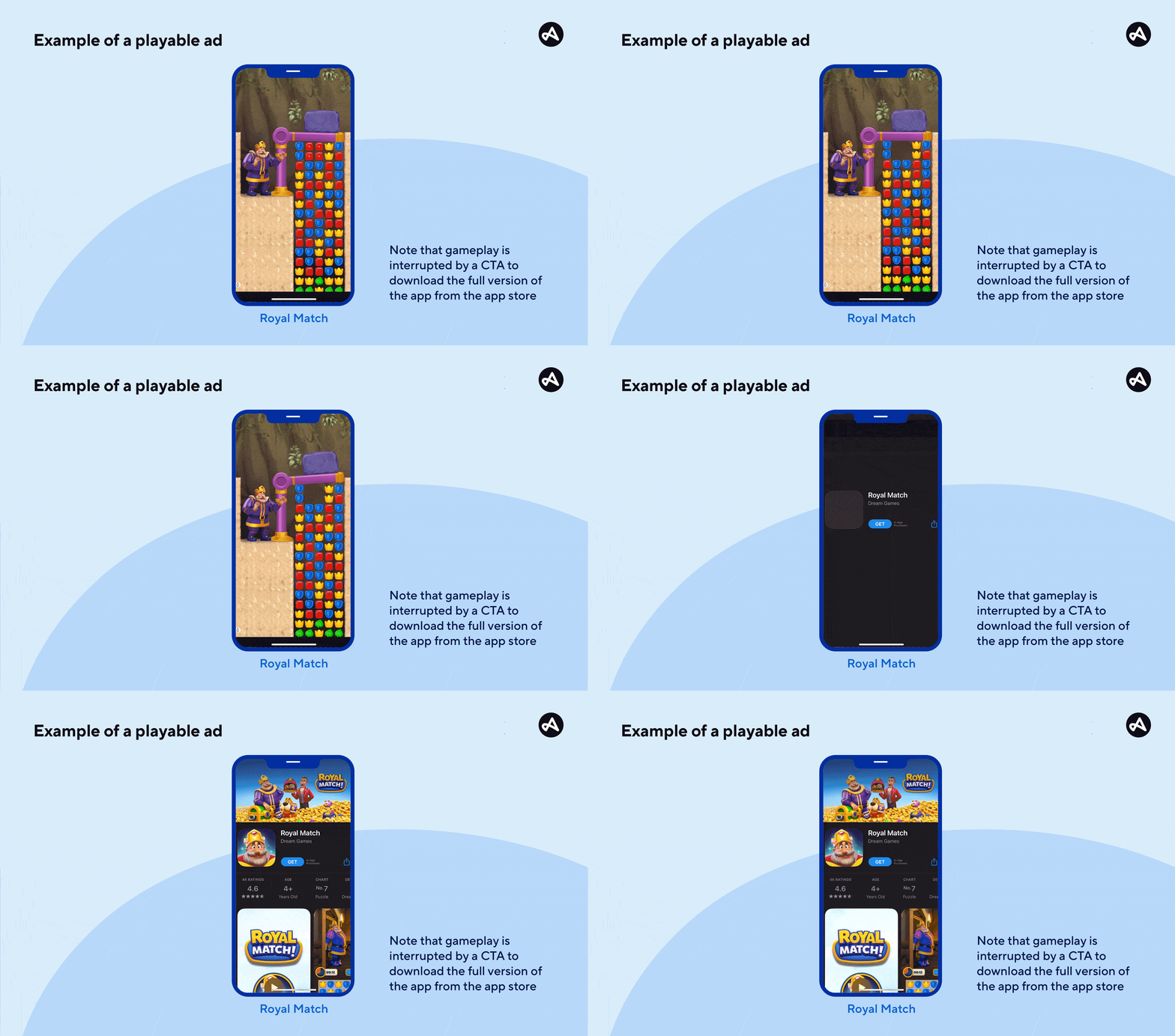
How do playable ads work?
A playable ad recreates a small section of a game’s gameplay. After a short introduction, users can interact with a simplified version of the game without leaving the app or environment where the ad appears. The experience is intentionally brief. A puzzle game might present a single level, while a strategy title could introduce one mechanic or objective. Once the session ends, users are prompted to install the full game.
Unlike video ads, playable ads allow potential players to experience the controls, mechanics, style, and overall feel of a game before downloading it. This helps players decide whether the game matches their interests while giving publishers and advertisers an opportunity to demonstrate what makes their title unique.
Because the playable reflects the actual game, users arrive with clearer expectations. This often leads to higher-quality installs than campaigns that rely on cinematic trailers or heavily edited gameplay footage.
Most playable ads follow a similar structure:
- A brief introduction explaining the interaction
- A short interactive demo highlighting the core experience
- A clear CTA directing users to the app store
In short, this format combines the engagement of interactive content with the performance benefits of traditional mobile advertising.
Why are playable ads so effective for mobile games?
Gameplay is often the deciding factor when someone chooses whether to install a game. Screenshots and videos can communicate visual style, but they cannot replicate the experience of actually playing.
This is why playable ads consistently outperform many traditional ad formats because they actively involve the user instead of asking them to passively consume content. Rather than simply telling users what an app offers, they let users experience it firsthand. Although they require more creative investment, many game publishers see the value through improvements in user quality and lifetime value (LTV) rather than install volume alone.
Put simply, advantages for marketers include:
- Higher engagement: Interactive experiences naturally capture more attention than static images or standard video ads. Users spend longer interacting with the creative, increasing brand recall and purchase intent.
- Better user quality: Because users understand the app before downloading it, installs tend to come from people with genuine interest. This often leads to higher retention rates, longer session times, and increased ROAS and LTV.
- Improved conversion rates: Playable ads help reduce uncertainty during the install decision. By demonstrating value before download, they frequently achieve higher click-to-install and install-to-activation rates than non-interactive formats.
- Lower wasted ad spend: Not every impression results in an install, but users who do convert are generally better qualified. This can improve campaign efficiency by reducing installs from users who quickly churn after opening the app.
Playable ads vs. video ads
Both playable and video ads showcase an app before install, but they do so in very different ways.
Video ads rely on passive viewing. They can effectively communicate visuals, storytelling, and product features, but users remain observers throughout the experience. Playable ads transform users into participants. Instead of watching someone else play a game or demonstrate an app, users interact directly with key mechanics themselves.
For gaming apps, this distinction is especially valuable. A well-designed playable ad lets users experience the gameplay loop that drives long-term engagement, making it easier to attract players who are genuinely interested.
That said, video ads remain an important part of many user acquisition (UA) strategies. They are often less expensive to produce and can communicate complex narratives or emotional messaging more effectively than interactive formats. Many advertisers use both formats together, testing performance across different audiences and campaign objectives.
Measuring playable ad performance
Installs only tell part of the story. To truly assess the value of a playable ad, it’s critical to measure performance and monetization post-install.
Advertisers should also measure how players acquired through playable ads behave compared with users from other acquisition channels. Do they return after the first day? Do they continue playing after a week? Do they progress through the game and generate revenue over time?
Answering these questions requires accurate attribution and post-install measurement.
Metrics such as retention, LTV, return on ad spend (ROAS), in-app event completion, and conversion rate help advertisers understand whether a playable creative is attracting valuable players rather than simply generating installs. Comparing these outcomes across creatives also helps user acquisition teams identify which playable experiences produce the strongest long-term results. It’s common the different segments will respond differently based on the creative they’re being served, which also provides highly useful insight into the scalability of a title.
This approach shifts optimization away from surface-level engagement and toward sustainable growth. A playable ad that delivers fewer installs may still outperform another creative if it consistently acquires players who remain active for longer or spend more throughout their lifecycle.
Best practices for creating playable ads
The most successful creatives are designed with both user experience and long-term performance in mind. If the demo presents mechanics that differ from the game itself, players may uninstall shortly after downloading because their expectations were set incorrectly.
Key best practices include:
- Show real gameplay: The playable should reflect the mechanics, controls, and overall user experience (UX) of the game. Misleading users with gameplay that doesn't exist may increase installs in the short term, but it often leads to poor retention.
- Get to the action quickly: Users should be interacting with the game within seconds. Long introductions or complicated tutorials create unnecessary friction and reduce engagement.
- Keep the experience simple: A playable ad isn't meant to recreate the full game. Focus on one core mechanic or a short level that captures what makes the game enjoyable.
- Optimize for performance: Playable ads should load quickly and run smoothly across a wide range of devices. Technical issues can prevent users from engaging with the experience before they've had a chance to evaluate the game.
- Test and iterate: UA teams should continuously experiment with different playable concepts, onboarding flows, and calls to action (CTAs). Measuring post-install performance helps identify which creatives attract players who deliver the greatest long-term value.
)
Publishers should also continue testing new creative concepts. Small changes to gameplay, progression, visuals, or difficulty can influence player quality and campaign efficiency, making ongoing creative and campaign optimization an important part of UA and retention.
Improve playable ad performance with Adjust
As a mobile measurement partner (MMP), Adjust enables mobile marketers to measure the full impact of playable ads (and all app marketing) via accurate attribution and powerful, multi-platform analytics. By connecting creative performance with post-install behavior, Adjust gives UA teams the data and insights needed to understand which playable experiences generate the highest-value players and the strongest ROI. You can easily uncover which creatives perform best, which channels deliver the best users, which playables work best on those channels, and ultimately where you should invest more for better returns.
Whether you’re launching a new mobile game or scaling an established title, Adjust provides the insights needed to optimize playable ad campaigns with confidence.
Request a demo to see first hand how Adjust allows you to measure performance, optimize campaigns, and grow your app business.
Never miss a resource. Subscribe to our newsletter.
Keep reading
